
Get a Free Quote
Thank You!
We'll get back to you shortly. For immediate help, call (216) 600-1760.

Cleveland EV Charger Installation installs home EV chargers for drivers across Greater Cleveland. We are licensed electricians, not a handyman with a drill, so the charger is wired to its own correctly sized 240-volt circuit, mounted where you want it, and inspected to code. We install Level 2 chargers, Tesla Wall Connectors, and hardwired or plug-in units, and we handle the electrical panel work that often comes with them.
Most of what makes an EV charger install simple or complicated is your home's electrical system, and a lot of Cleveland housing stock is older. An older 100-amp panel, a full breaker box, or a long run from the panel to the garage all change the job. We look at your panel first, tell you straight whether it has the capacity or needs an upgrade, pull the permit, and size everything so your charger runs at full speed without tripping breakers.
A Level 2 charger is a real electrical job, not a plug-in. These are the signs it needs a licensed electrician.
A Level 2 charger runs on 240 volts, the same as an electric range or dryer, not a standard wall outlet. That means a dedicated circuit, the right wire gauge, and a breaker sized to the charger, which is electrical work that needs a licensed electrician and a permit. Done right, it charges several times faster than a regular plug.
Many Cleveland homes still run a 100-amp panel or a box with no open slots. Before adding a charger that pulls 40 to 60 amps, the panel has to have the capacity, or it needs an upgrade. We check the load first so you are not overloading an old panel or tripping breakers every time you charge.
If your panel is in the basement and you park at the far end of the garage or driveway, the wiring run gets long, and that affects the wire size and the cost. It is still very doable, but it is a real electrical job, not a quick plug-in, and getting the run and conduit right is what keeps it safe and up to code.
An existing charger that trips the breaker, charges slower than it should, throws a fault, or has stopped working is telling you something: a loose connection, an undersized circuit, a failed unit, or a panel issue. We diagnose it instead of guessing, and tell you whether it is a repair or a replacement.
Home EV charging installed by licensed electricians, the circuit, the panel work, the permit, and the inspection, all handled.
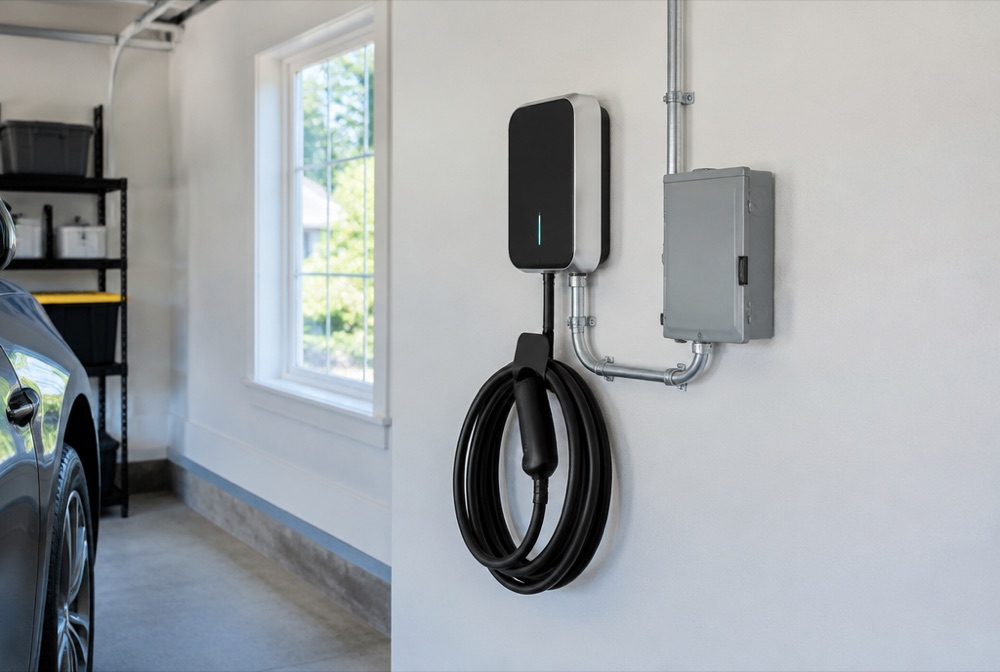
EV charger installation is the core of what we do. We install home charging for every kind of EV and every kind of charger, hardwired or plug-in, on the wall of your garage, the side of the house, or at a detached garage or carport. Because we are licensed electricians, the whole job is ours: the circuit, the breaker, the mount, the permit, and the inspection, not just hanging the unit on the wall.
Every install starts with your electrical panel, because that is what decides whether the job is simple or needs an upgrade. We check your panel's capacity and open slots, size the circuit to the charger, run the wiring and conduit cleanly, and set the charger where it actually reaches your car. We pull the permit and handle the inspection so the install is to code.
If your home needs a panel upgrade or a sub-panel to support the charger, we do that too, so you deal with one electrician for the whole job instead of being handed off. One quote, one crew, a charger that runs at full speed.
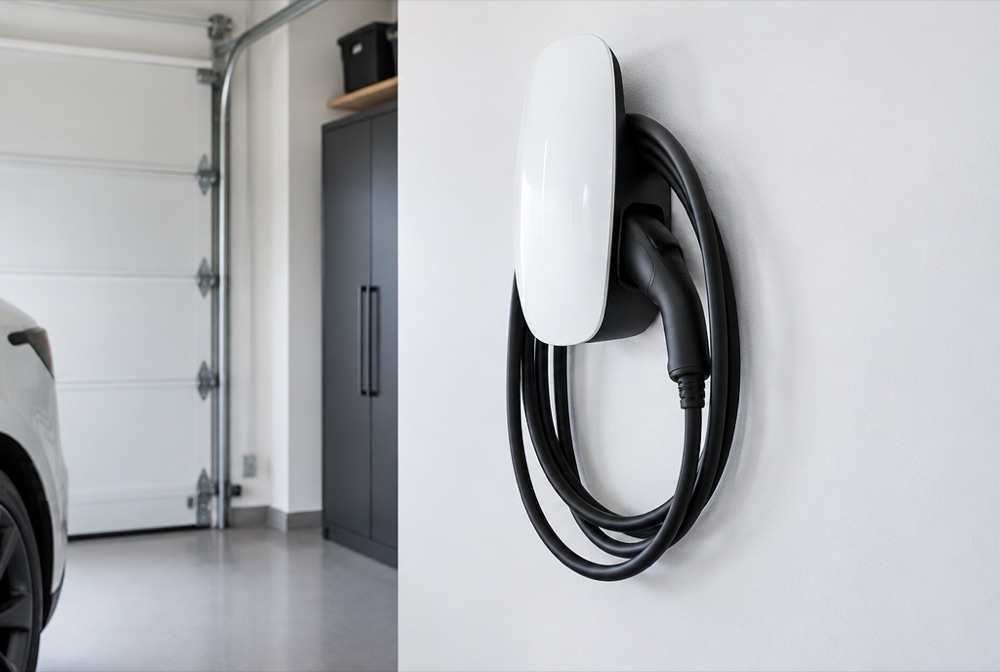
The Tesla Wall Connector is the fastest home charging for a Tesla, and it has to be hardwired to a dedicated 240-volt circuit to deliver its full speed. We install the Wall Connector on the wall you choose, size the circuit to get the charging rate you paid for, and set it up for the amperage your panel can support.
A lot of what makes a Wall Connector install go smoothly is the panel and the wire run, and we handle both. If you are running more than one Tesla or EV charger, Wall Connectors can share a circuit in a load-managed setup, and we wire that so multiple cars charge without overloading the panel. We pull the permit and leave it clean and to code.
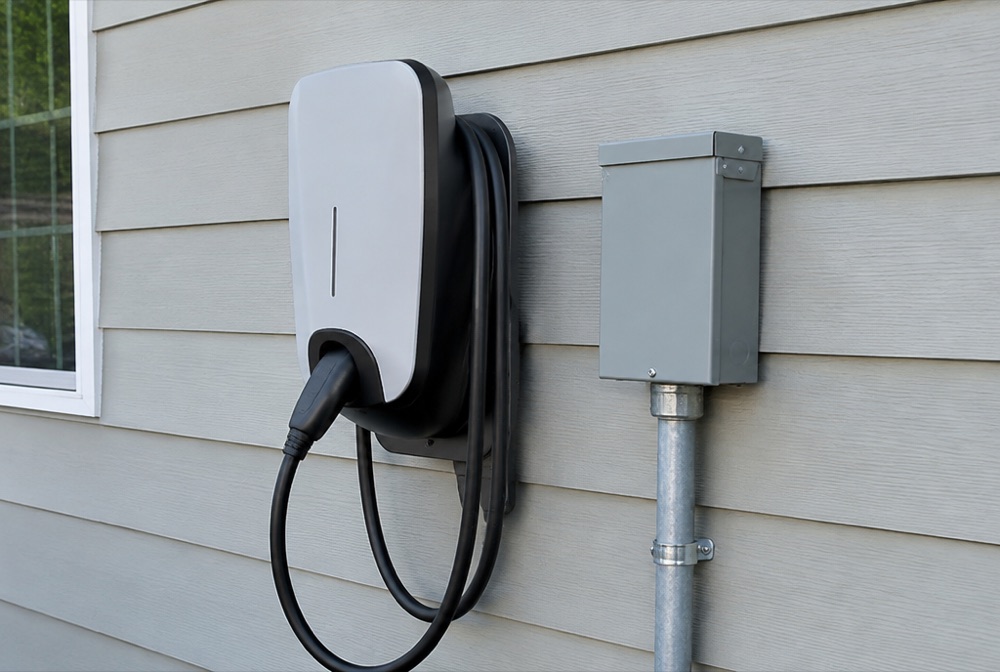
A Level 2 charger is the 240-volt home charger that charges several times faster than the standard plug your car came with. We install Level 2 chargers of any brand, hardwired or on a NEMA 14-50 outlet, sized to your car and your panel so you get real charging speed overnight instead of a slow trickle.
The right setup depends on your charger, your car, and how much power your panel can give it. We size the circuit and breaker to the charger's amperage, run the wiring to where you park, and confirm the panel can carry the load before we add it. If it cannot, we tell you what the panel needs rather than installing a charger that trips every night.
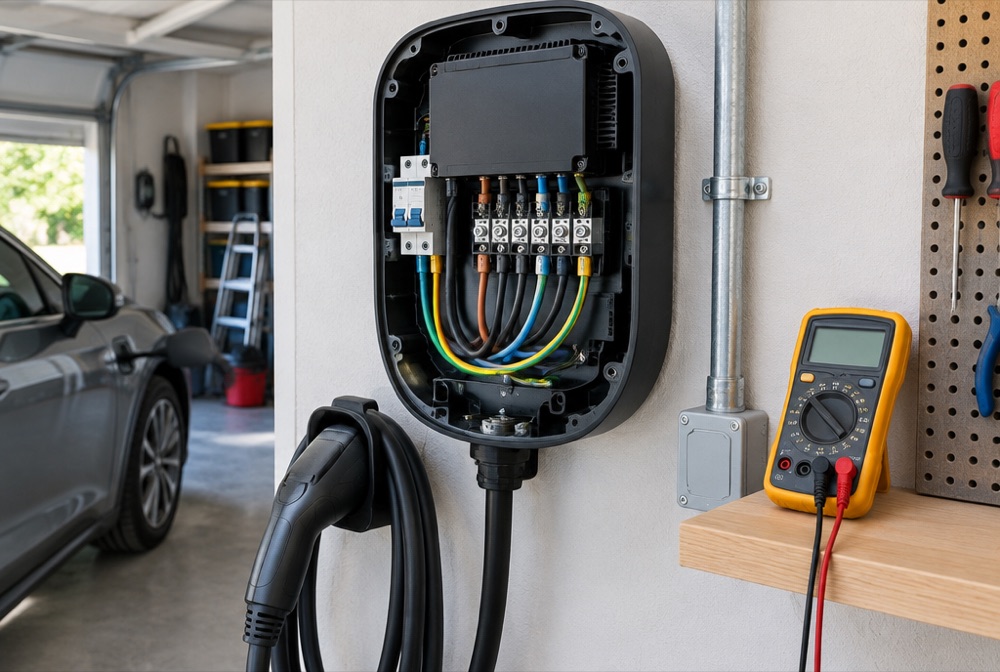
When a home EV charger stops working, charges slowly, or trips the breaker, it is usually one of a few things: a loose or corroded connection, an undersized circuit, a failed charger unit, or a problem back at the panel. We diagnose which one it is instead of guessing or defaulting to a full replacement.
Because we install these every day, we know how they are supposed to be wired and where they fail. If it is a wiring or breaker issue, we fix it. If the unit itself has failed, we tell you straight and, if it makes sense, swap it for one that fits your setup. Either way you get a straight answer, not an automatic upsell.

Charging an EV at home is not like plugging in a lamp. A Level 2 charger is one of the biggest electrical loads you can add to a house, and in Cleveland the homes it goes into are often older. That combination is why this is a licensed electrician's job, not a weekend project.
A lot of Greater Cleveland's housing stock was built decades ago, and plenty of it still runs a 100-amp panel. Those panels were sized for the appliances of their day, not for a car charger pulling 40 to 60 amps on top of everything else. Before a charger goes in, the panel has to actually have room for it, which is the first thing we check.
A Level 2 charger needs its own dedicated 240-volt circuit, the right wire gauge for the amperage, and a breaker sized to match. Undersize any of it and the charger either trips constantly or runs hot, which is a fire risk. Getting the circuit right is the whole job, and it is why it has to be wired by someone who does this correctly.
In many Cleveland homes the panel is in the basement and the car sits in a detached garage or at the end of the driveway. That distance means a longer wire run, heavier wire, and conduit done right so it is protected and to code. It is very doable, but the run is often what separates a clean install from a cheap one that fails inspection.
An EV charger install in the Cleveland area needs a permit and an electrical inspection, and that is a good thing. It means the work is verified safe, it keeps your homeowners insurance valid, and it is on record when you sell the house. We pull the permit and handle the inspection as part of the job, so you are never the one explaining unpermitted wiring later.
None of this is a reason to put off charging at home. It is the reason to have it done by a licensed electrician who checks the panel, sizes the circuit, runs it right, and pulls the permit, so your charger runs at full speed and your home stays safe.
A clean EV charger install is mostly about the electrical work behind it. Here is how we do it.

Every job starts with a look at your electrical panel and where you park. We check the panel's capacity and open slots, decide whether it can carry the charger or needs an upgrade, and plan the circuit and the route to your car. You get a straight answer and a firm price before anything starts.
We pull the electrical permit with the city before we wire anything, because an EV charger install is supposed to be permitted and inspected in the Cleveland area. It is part of our job, not an extra you have to chase, and it keeps the install legal, safe, and on record.
We install a dedicated 240-volt circuit sized to your charger, run the wire and conduit cleanly from the panel to where you park, and mount the charger exactly where you want it, hardwired or on a NEMA 14-50 outlet. If the panel needs an upgrade or a sub-panel, we handle that in the same visit.
We power it up, confirm the charger delivers its full rated speed, and make sure everything is tight and labeled. We handle the inspection, leave the work area clean, and show you how it runs. You end with a charger that works the first time and passes inspection.
An EV charger is a 240-volt circuit, not a plug. Every install is done by licensed, insured electricians who size the circuit, pull the permit, and get it inspected, so it is safe and to code, not just hung on the wall.
We find out whether your panel can carry the charger before we give you a price, so you get a real number, not a low quote that balloons when we find the panel is full. If it needs an upgrade, you know up front.
Charger, circuit, panel upgrade, permit, and inspection, all from one crew. You are not hiring a charger installer and then a separate electrician for the panel. One quote, one visit, one company that stands behind it.
You get a free on-site estimate and one written price before we start. No hourly meter, no surprise at the end, and no charge to come look at it.
Most Cleveland EV charger installers will not post a number. We will. A straightforward Level 2 install near your panel is the low end, and if your older panel needs an upgrade to carry the charger, that is the bigger number. The real price depends on your panel, the charger, and how far it is from where you park, so every job gets a free on-site quote first.
A Level 2 charger on a dedicated circuit near your panel, including the mount, breaker, and permit.
When your panel is full or too small, the job includes a panel or service upgrade so it can carry the charger.
A standalone upgrade, often 100-amp to 200-amp, to make room for an EV charger and future loads.
What moves the price: whether your panel has capacity or needs an upgrade, the charger's amperage, how far the run is from the panel to your car, hardwired versus a NEMA 14-50 outlet, and the permit and inspection, which we include.
These are typical ranges for planning, not a quote. Every panel and every home is different, so we price yours at a free on-site visit before any work begins.
Straight answers to what we hear most during free EV charger estimates around Cleveland.
A standard Level 2 install near your panel usually runs about $800 to $2,500, including the circuit, the mount, and the permit. If your panel is full or too small and needs an upgrade, the total is more often in the $3,000 to $8,000 range. The number depends on your panel, the charger, and the distance from the panel to your car, so every job gets a free on-site quote first.
Yes. An EV charger install adds a dedicated 240-volt circuit, which needs an electrical permit and an inspection in the Cleveland area. We pull the permit and handle the inspection as part of the job. Permitted work keeps your install safe, keeps your homeowners insurance valid, and is on record when you sell the home.
It depends on your panel's size and how much of it is already in use. A Level 2 charger pulls 40 to 60 amps, so an older 100-amp panel or a box with no open slots may not have room without an upgrade. We check the panel's capacity first and tell you straight whether it can carry the charger or needs to be upgraded, before you commit to anything.
Not right now. The federal home EV charger tax credit ended on June 30, 2026, so chargers installed after that date do not qualify, and Cleveland's utilities do not currently offer a residential charger rebate. We will not quote you a discount that does not exist. What we do is keep the price fair and up front, and if a new program opens we will point you to it.
A straightforward Level 2 install is usually done in a day, often a few hours. If your panel needs an upgrade, a sub-panel, or a long wire run to a detached garage, it takes longer, and we tell you what to expect when we quote it. Either way we schedule it so it is done in one trip whenever possible.
Level 1 is the charger that comes with the car and plugs into a standard 120-volt outlet. It works, but it is slow, often only a few miles of range per hour. Level 2 runs on a 240-volt circuit, the same kind a dryer or range uses, and charges several times faster, enough to fully charge most EVs overnight. Level 2 is what nearly everyone installs at home.
Yes. We install the Tesla Wall Connector hardwired to a dedicated 240-volt circuit, sized so it delivers its full charging speed. If you have more than one Tesla or EV charger, Wall Connectors can share a circuit in a load-managed setup, and we wire that so both cars charge without overloading your panel.
Yes. Every job starts with a free on-site visit where we check your panel, measure the run to where you park, and give you one written price before any work begins. There is no charge and no obligation.
We install home EV chargers for drivers across Cleveland and the surrounding suburbs, from the East Side and West Side out through Cuyahoga County and the neighboring communities.